The storm has passed and the water’s receding. The operations team begins working on a restart schedule. EHS and facility teams begin working another angle: What did the water leave behind? Whether it comes from a hurricane or simply days of heavy rain, floodwater picks up whatever it touches: fuel, process chemicals, sewage, and anything stored below the high-water line. When it drains, it leaves that contamination behind on floors, equipment, debris, and in the soil. What’s important to understand is, floodwater contamination is a waste stream. If it’s on your site, identifying it, handling it, and proving where it went falls to you.
What’s in the Water at Industrial Sites
Floodwater at a plant, terminal, or yard rarely carries a single contaminant. It’s usually a mix, and that mix depends on what was onsite when the water rose.
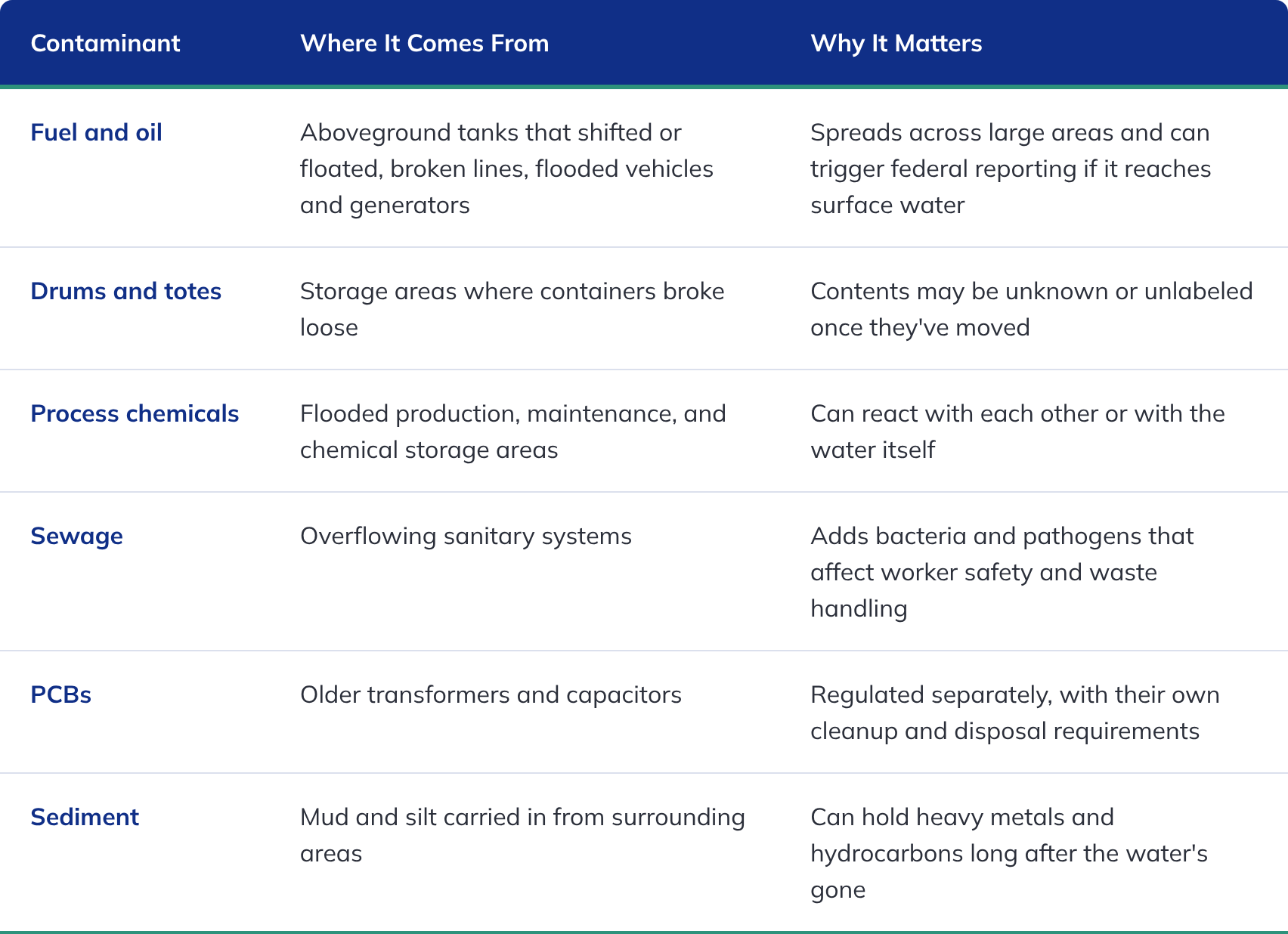
The challenge with floodwater contamination is that clean-looking water isn’t necessarily clean. OSHA’s flood response guidance warns that tanks and chemical containers can break away and float downstream, which means contamination can show up at your site from someone else’s. That’s why an experienced emergency response team starts with assessment.
What to Do in the First Few Hours
The decisions made right after the water drops shape everything that follows. Before cleanup starts, EHS teams should:
- Keep people out of standing water until it’s been assessed.
- Document conditions with photos and video before anything is moved.
- Locate tanks, drums, and containers, and note any that have shifted, tipped, or gone missing.
- Check for sheens, odors, and stained surfaces that point to a release.
- Hold off on pumping until you know what’s in the water and where it’s allowed to go.
- Call your response partner early, even if the full scope isn’t clear yet.
Pumping contaminated water into a storm drain or loading soaked materials into a dumpster can turn a manageable situation into a violation. Once the site is stable, the work shifts from emergency to recovery, and full restoration services can take a facility from damaged to fully functional in one seamless operation.
Why Contaminated Debris Changes the Cleanup Plan
Once the water’s down, the instinct is to clear the site fast. Every day of downtime has a cost. But storm debris removal at an industrial facility isn’t the same as hauling away branches and broken fencing.
Anything that sat in contaminated water can carry that contamination with it. Drywall, insulation, pallets, packaging, and stored product may all need to be separated and evaluated before they leave the site. In most cases, your facility is still considered the generator of that waste, which means the liability follows the material wherever it goes.
We covered how that responsibility works in our post on hazardous waste manifests, and it applies to storm waste just as much as routine waste.
In light of all this, effective flood debris removal usually means:
- Separating debris by material type and level of contamination
- Keeping clean and contaminated streams apart from the start
- Sampling and characterizing waste before it ships
- Documenting every load
Getting storm debris removal right from the beginning keeps recovery on schedule and keeps contaminated material out of the wrong waste stream.
When Floodwater Contamination Calls for a Hazmat Response
Not every flooded facility needs a full hazmat response. But certain signs mean it’s time to stop and bring in specialists:
- A visible sheen on standing water or nearby waterways
- Strong chemical or fuel odors
- Damaged or displaced tanks, piping, or secondary containment
- Drums or containers you can’t identify
- Flooded electrical equipment that may contain PCBs
Water can show none of them and still be contaminated, which is why testing comes first.
Timing matters. What happens in the first 24 hours of a spill response often determines how long the entire recovery takes. Reporting deadlines matter, too. Under the Clean Water Act, an oil discharge that creates a sheen on surface water can require a report to the National Response Center, and many states have their own notification rules.
An emergency hazmat response team can contain the release, help you sort out your reporting obligations, and start cleanup in the right order. When the situation isn’t clear, make the call early. A fast emergency hazmat response is almost always simpler and less expensive than fixing a cleanup that started out in the wrong direction.
Coastal & Waterfront Facilities Face Added Risk
Hurricanes bring a hazard most inland facilities never see: storm surge. For terminals, ports, marinas, and waterfront plants, that makes hurricane cleanup more complex. Surge can push contamination directly into navigable waters, and a release on the water spreads faster and costs more to recover than one on land.
These facilities need a partner equipped to work on both sides of the shoreline. Miller’s marine response capabilities include U.S. Coast Guard Oil Spill Removal Organization (OSRO) classification, with boom, skimmers, and vessels ready to deploy. That lets hurricane cleanup on land and on the water run as one coordinated effort.
One Storm, One Paper Trail
After a major storm, the paperwork around floodwater contamination can get complicated quickly. One vendor pumps water. Another hauls debris. A third handles disposal, maybe through a broker. Each one keeps its own records. But when a regulator or insurer asks for the full picture, they don’t call the vendors. They call you.
With Miller Environmental Group, one team tracks everything from the first assessment to final disposition:
- Characterization: We sample and profile waste streams upfront, so there are no surprises when a load reaches a facility.
- Transportation: Our DOT-compliant waste transportation and disposal services move contaminated water offsite and complete flood debris removal using the same team that performed the cleanup.
- Disposal: Oily water, one of the most common byproducts of flooding at industrial sites, can be processed through oil-water separation at our own permitted treatment, storage, and disposal facilities. (Acceptance varies by facility and waste type, which is why characterization comes first.)
- Documentation: We track manifests through to their signed return and hand you a complete closeout package.
“After a storm, you shouldn’t have to chase three vendors for your paperwork. One team, one record, and every load accounted for.”
The Plan Before the Storm
Hurricane season runs through November 30, and severe storms don’t stick to a calendar anyway. Facilities that recover fastest are usually the ones that already know who they’re calling and what that team will do when it arrives. If you haven’t built that plan yet, our guide to storm preparation and emergency response is a good place to start.
Dealing with floodwater contamination at your site right now? Or want to be ready for the next storm? Contact Miller Environmental Group or call us 24/7 at (800) 394-8606.
